Best Electric Bikes for Heavier Riders UK: What Actually Matters

Updated August 2026 · Voltryv Editorial Team
E-bike marketing is built around a 70 kg model gliding through a sunlit city. If you weigh 95, 110 or 120 kg, the questions are different: will it carry me, will it still climb, and will anything bend? Good news — an e-bike is one of the best purchases a heavier rider can make, precisely because the motor erases the penalty weight imposes on a regular bike. You just need to read the right specs. Here they are, in order of importance.
1. The payload rating (the spec that rules them all)
Every properly engineered e-bike publishes a maximum load: the total weight of rider plus clothing, rucksack and shopping. Every bike in the Voltryv range is rated to 120 kg (about 18.9 stone) — you will find it in the specification table on each product page.
Two honest rules:
- Count everything. A 105 kg rider with a 10 kg loaded rucksack is a 115 kg payload — within rating, but shop with that number, not your bathroom-scale number.
- Ratings are engineering limits, not targets. Riding at or near the limit is exactly what the rating permits — that is what it is for. Consistently exceeding it is where wheels, spokes and warranties suffer.
2. Motor power (this is where heavier riders should spend)
Physics is blunt: moving more mass up a hill takes more energy. A 250W motor that wafts a 70 kg rider up a gradient will labour with 115 kg. This is the single strongest argument for choosing a bike built on a more powerful platform — like our 750W BK6S or the 500W KL6S — used in the road-legal 250W mode on public roads, with the full-power mode available for private land. (How that dual-mode setup works legally is explained in our e-bike law guide.)
The practical difference is felt on hills and pull-aways: a stronger platform under-stressed lasts longer and climbs where a minimal motor bogs down.
3. Wheels and tyres (small and fat is strong)
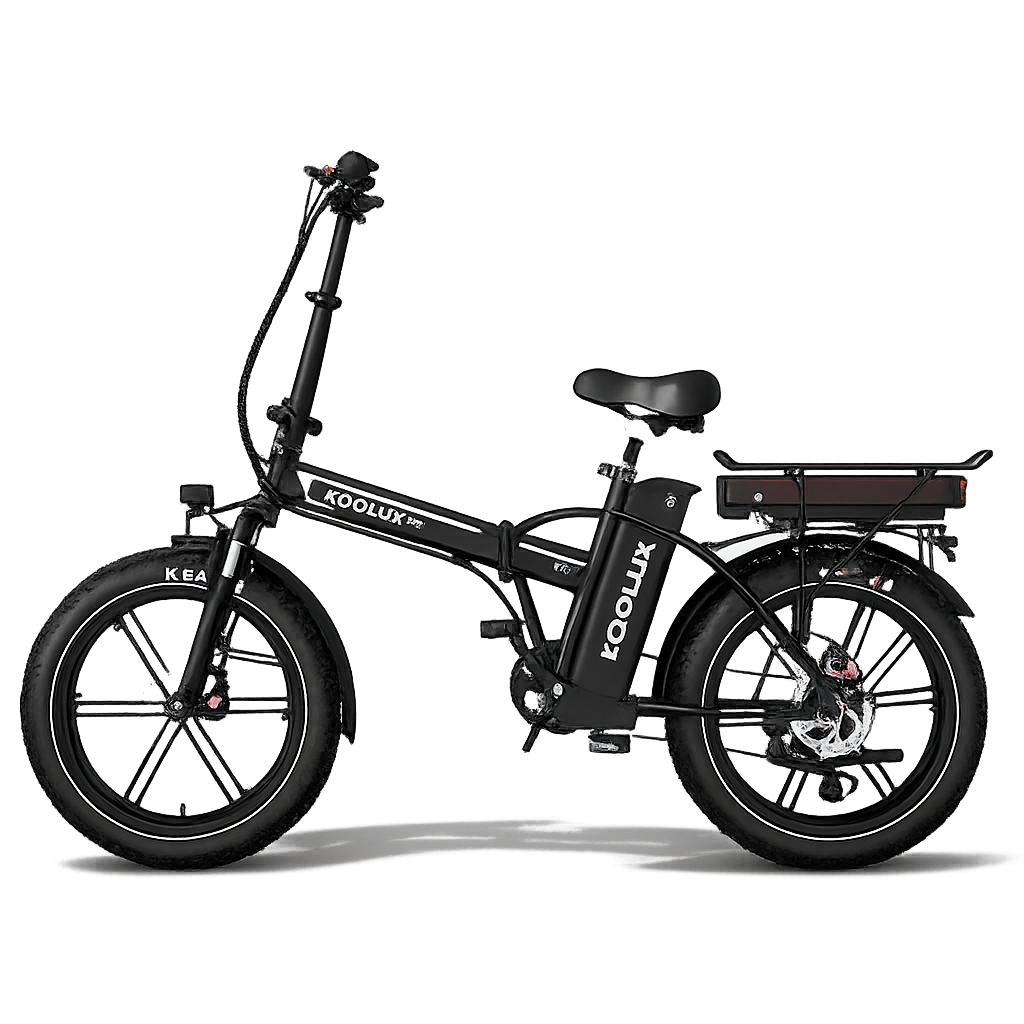
Counterintuitive but true: smaller wheels are stronger wheels. Shorter spokes flex less and take load better — a 20" wheel laced to a hub motor is structurally excellent under heavier riders. Add 4-inch fat tyres run at the upper end of their pressure range and you get a wide, cushioned contact patch that shrugs off potholes instead of transmitting them into the rims. Our fat tyre guide covers the trade-offs; for heavier riders the comfort-and-strength case is at its strongest.
4. Brakes (non-negotiable: hydraulic)
Braking distance scales with total mass. Mid-range and flagship bikes carry hydraulic disc brakes — more power, better modulation, no cable stretch — and for riders above ~100 kg we consider them essential rather than a nice-to-have. Keep pads checked monthly per our maintenance guide; heavier riders wear pads proportionally faster.
5. Honest range maths
Every extra 10 kg of payload costs roughly 5–8% range (the full formula here). A heavier rider should simply size the battery one step up from the standard advice:
- Round trips under 20 km → 600 Wh class (BK6S)
- 20–40 km → 750 Wh (KL6S)
- 40 km+ or hills → dual battery, 1,123 Wh (X11 or BK6S PRO)
Bigger batteries also cycle shallower for the same commute, which extends their life — a double win covered in the battery guide.
Comfort tweaks that cost little
- Saddle: wider platform saddles distribute weight far better than racing perches — a £25–£40 upgrade worth every penny.
- Tyre pressure: run the upper half of the sidewall range to protect rims; recheck weekly.
- Riding position: upright geometry (riser bars, adjustable stems) moves load off wrists and onto the saddle where it belongs.
- Suspension seatpost: a cheap add-on that takes the sting out of broken tarmac.
Our honest picks for heavier riders
| Pick | Bike | Why |
|---|---|---|
| Best value | BK6S 750W — £739 | Strong 20"×4.0" wheels, powerful platform, 624 Wh |
| Best range | KL6S — £819 | 749 Wh battery, hydraulic brakes, fat tyres |
| The flagship | BK6S PRO — £959 | Dual battery, most powerful platform, premium brakes |
One honest caution the other way: ultralight minimalist folders (like our own 17.4 kg X1) carry the same 120 kg rating but pair it with a small 216 Wh battery and a modest motor — fine near the middle of the weight range on flat commutes, not the tool for a 115 kg rider in a hilly town. Match the bike to the job; our buyer guide walks through the full decision.
Common questions
What happens if I exceed the weight limit?
Nothing dramatic on day one — accelerated wear on spokes, rims and pads over time, and damage from overloading is not covered by warranty. If your all-in payload sits above 120 kg, get in touch before buying and we will advise honestly.
Will the motor actually move me?
Yes — that is the point of the powerful platforms. Expect slightly gentler acceleration and 10–20% less range than the brochure figure, exactly as the maths predicts. The riding experience — hills flattened, headwinds cancelled — is transformative regardless of rider weight.
Is an e-bike good exercise for a heavier rider?
One of the best: low-impact on knees and joints, intensity you control with the assist level, and consistency the research shows beats occasional gym sessions — see the health evidence in our worth-it guide. Many riders start on high assist and dial it down as fitness builds.
The bottom line
Payload rating first, motor platform second, wheels and brakes third, battery one size up. Every bike in our UK range is rated to 120 kg with the spec table published on every listing — free delivery and a 2-year warranty included, and salary sacrifice via Cycle to Work knocks 28–42% off.