E-Bike Battery Care: 10 Rules to Double Your Battery's Lifespan

Updated August 2026 · Voltryv Editorial Team
Your battery is the single most expensive component on your e-bike — typically 30–40% of the bike's value. Treated well, a modern lithium-ion pack delivers 800–1,000 full charge cycles before noticeable fade: five or six years of daily commuting. Treated badly, the same pack can be visibly tired within two.
The difference is not luck or brand. It is a handful of habits. Here are the ten rules our engineers actually follow, the UK-specific winter advice most guides skip, and the three mistakes that kill batteries faster than anything else.
First, understand why batteries degrade
Lithium-ion cells age in two ways: cycle ageing (every full charge-discharge cycle wears the chemistry slightly) and calendar ageing (cells degrade slowly even when unused, faster when hot or stored full). A "cycle" is cumulative — two 50% top-ups count as one cycle, so partial charging does not waste cycles. What accelerates both kinds of ageing: sitting at 100% or 0% for long periods, heat, and charging below freezing. Every rule below follows from those facts.
The 10 rules
1. Live between 20% and 80% day-to-day
Shallow cycles in the middle of the charge range cause a fraction of the wear of full 0–100% cycles. Daily commuters who charge to ~80% and recharge around 20–30% routinely get 2–3× the usable lifespan from the same pack.
2. Save 100% charges for long-ride days
Charging to full is fine — sitting full for days is not. Charge to 100% the night before a long weekend ride, not every night out of habit. Need more range headroom day-to-day? That is a battery-size problem, not a charging problem — see our range guide for matching capacity to your commute.
3. Never run it flat
Deep discharge is stressful; recharge around 20% rather than riding to cut-off. If the bike does shut down on you, charge it the same day — a lithium pack left empty self-discharges further and can drop below its protection threshold, at which point it may never charge again.
4. Charge indoors at room temperature
Cells charge happiest at 10–25°C. A kitchen or hallway is ideal; an unheated UK shed in January is not.
5. Never charge a freezing battery
Charging below 0°C causes lithium plating — permanent, invisible damage. If the bike lived outside overnight in winter, bring the battery in and let it warm for 30–60 minutes before plugging in. (Riding while cold is fine; charging while cold is not.)
6. Unplug once charged
Quality chargers stop at full, but the pack then sits at 100% — the state it ages fastest in. Charge, unplug, done. Do not leave it topping up for days.
7. Use the original charger, always
The charger and the battery management system are matched for voltage and current. A random higher-amp charger from a marketplace is the leading cause of damaged packs — and voids your warranty.
8. Storing the bike for 2+ weeks? Store at 50–60%
Half-charge is the lowest-stress state for lithium cells. Holiday, injury, or just a rainy month — drop the battery to around half and store it indoors (chart below).
9. Keep it cool in summer
Heat is the silent killer. Never leave the battery in direct sun, a conservatory, or a hot car boot — a black battery case behind glass in July can pass 60°C, which permanently costs capacity.
10. Keep contacts clean and dry
UK rain finds everything. Dry the battery dock after wet rides, check the contacts monthly, and clean them with a dry cloth. Corroded contacts cause voltage drops, error codes and heat.
UK winter battery care
Two separate issues, often confused:
- Temporary range loss: at 0°C a pack delivers 15–25% less range. This recovers as it warms — it is not damage. Store the battery indoors overnight and fit it just before riding to start each trip warm.
- Permanent damage: caused by charging below freezing (rule 5) or storing an empty pack in the cold all winter. Both are avoidable and neither is covered by any warranty as fair wear.
Storage chart: not riding for a while?
| Off the bike for | Charge level | Where |
|---|---|---|
| Under 1 week | Whatever it is | Anywhere sensible |
| 2–6 weeks | 50–60% | Indoors, 10–20°C, off the charger |
| 2–6 months | 50–60%, check monthly, top up if below 30% | Indoors, away from heat sources |
The 3 habits that kill batteries fastest
- The winter shed death: bike put away in October at 10% charge, found in March refusing to charge. An empty pack + cold + five months = a battery below its recovery threshold. This is the most common preventable e-bike battery failure in the UK.
- Permanently plugged in: using the charger as a stand and holding the pack at 100% for days at a time. Convenient, and quietly halves its life.
- Ignoring damage: a dropped, dented or swollen battery is not cosmetic. Stop using it and contact the retailer. Never charge a visibly damaged pack.
On safety generally: charge on a hard surface away from your exit route, use the supplied charger, and don't charge a damaged pack. Follow those and quality-cell e-bike batteries are extremely safe.
The dual-battery cheat code
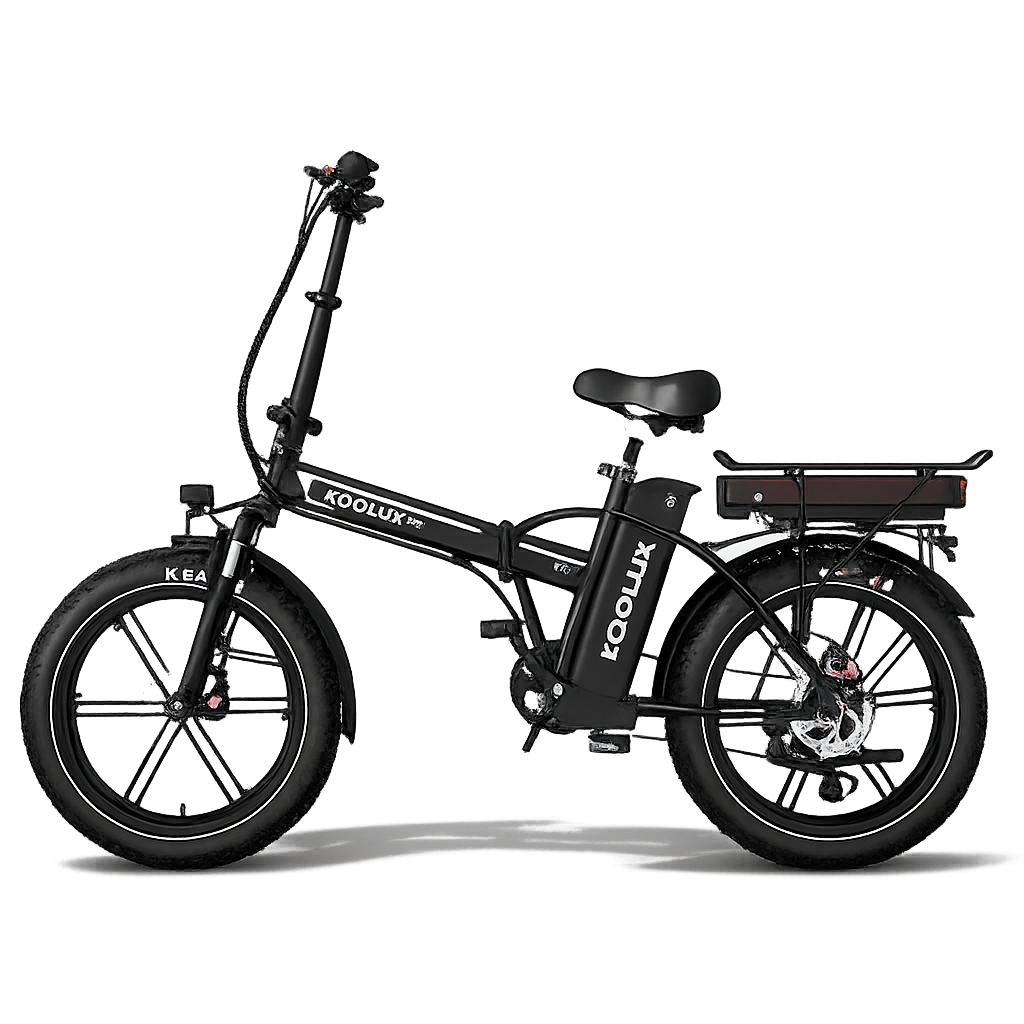
Bikes like the KOOLUX X11 and BK6S PRO carry two batteries — which does not just double range, it halves the cycles each pack accumulates. The same logic applies to choosing a bigger single battery: a KL6S covering a 20 km commute uses a shallow 25% cycle where a small pack needs a deep 80% one. Oversizing the battery is the lowest-effort longevity strategy there is.
When is a battery actually worn out?
When it holds 60–70% of its original range, expect the fade to accelerate. Replacements for our bikes cost £250–£400 — and every Voltryv e-bike includes a 2-year battery warranty against defects. If you are choosing a new bike and want the pack to last, our 2026 folding e-bike ranking lists battery sizes for every model.
Common questions
Can I leave it charging overnight?
The charger will stop at full, but you lose twice: the pack sits at 100% for hours (rule 6), and best practice is not to charge lithium batteries while everyone is asleep. Evening charging — plug in after work, unplug before bed — gives a full battery with neither downside.
How long does a full charge take?
Typically 4–7 hours from near-empty with the supplied charger, depending on capacity. A 20–80% commuter top-up is far quicker — usually 2–4 hours.
Can I leave the battery on the bike?
Fine in mild weather. Below ~5°C, or for any storage over a week, bring it indoors — see the chart above.
Bottom line
Charge shallow, store at half, keep it warm in winter and cool in summer, and use the charger it came with. That is 90% of battery care — and the difference between replacing a £300 pack in year two and forgetting it exists until year six.
Every bike in our UK electric bike collection ships with a matched charger, a 2-year battery warranty and free UK delivery.