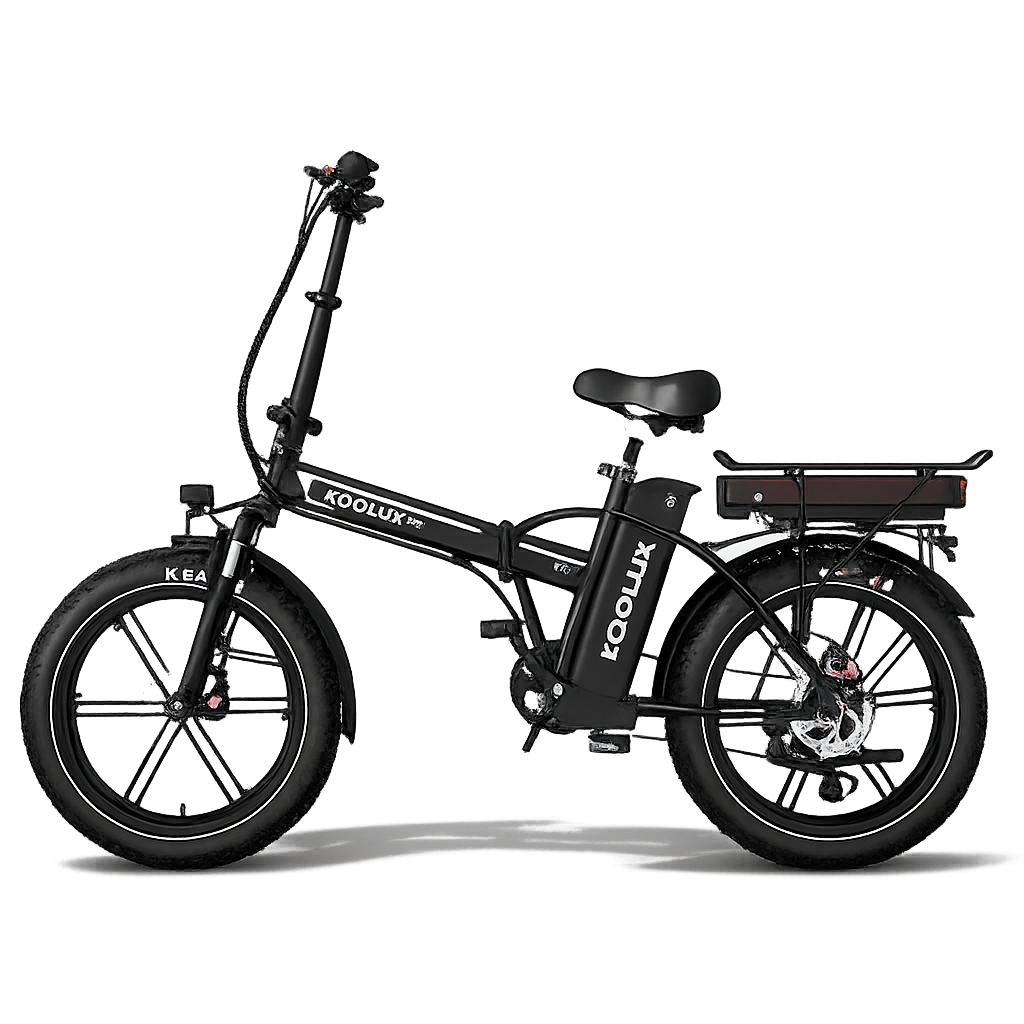
Fat Tyre Electric Bikes: What They Are Good For (and When to Skip One)

Updated August 2026 · Voltryv Editorial Team
Fat tyre e-bikes have gone from novelty to mainstream in the UK — half the bikes in our own range now run 3–4 inch rubber. And because we sell both kinds, we can afford to be straight with you: fat tyres are genuinely brilliant for certain riders, and a pointless weight penalty for others. Here is how to know which you are.
What counts as a fat tyre?
A conventional commuter tyre is 1.75–2.4 inches wide. Anything from 3.0 inches up counts as fat; 4.0 inches is the classic full-fat width. On our bikes: the X10 runs 16" × 3.0" rubber, while the BK6S, KL6S and X11 run 20" × 4.0".
The physics, in one paragraph
A wider tyre runs at lower pressure — 8–20 psi instead of 40–60. Low pressure means a bigger contact patch (more rubber gripping the road) and a tyre that deforms over bumps instead of bouncing off them. In effect, fat tyres are suspension you never have to service. The cost: more rubber on the road means more rolling resistance, and more rubber on the wheel means more weight.
What fat tyres are genuinely good at
- Wet UK roads. The larger contact patch is confidence-inspiring on greasy tarmac, wet leaves, painted lines and manhole covers — the everyday hazards of a British commute.
- Potholes and broken surfaces. A 4-inch tyre at 15 psi swallows road damage that would rattle a skinny-tyre rider's fillings loose.
- Mixed terrain. Towpaths, gravel tracks, forest fire roads, grass — one bike does all of it without a second thought.
- Comfort without maintenance. Suspension forks on budget bikes are usually poor and always need servicing. Fat tyres deliver most of the comfort with zero moving parts.
- Stability for returning riders. If you have not ridden in twenty years, the planted, unhurried feel of fat tyres is the easiest way back in.
- Winter. Drop the pressure a few psi and grip improves further on frost and slush.
The honest downsides
- Weight: fat tyres, tubes and rims add 2–4 kg to the bike. Fine to ride (the motor does not care), annoying to carry.
- Range: extra rolling resistance costs roughly 10–20% range on smooth tarmac versus a standard tyre — our range guide explains the Wh maths. On rough surfaces the gap narrows to nearly nothing.
- Speed feel: below the 15.5 mph assist limit the motor masks the drag, but pedalling a fat bike above the cutoff takes noticeably more effort.
- Fitting mudguards and finding replacement tubes is slightly more faff than standard sizes (we stock spares for every bike we sell).
So — do you need one?
Fat tyres, yes: your commute includes towpaths, park cuts, cobbles or genuinely bad tarmac; you ride all winter; comfort matters more than the last 10% of range; you want one bike for commuting and weekend trails.
Standard tyres, yes: you ride long, smooth road miles and care about efficiency — that is exactly what our X2 and X3 with 26" Kenda road tyres are for, and why we sell both styles.
Our fat tyre line-up
| Bike | Tyres | Price | Best for |
|---|---|---|---|
| X10 | 16" × 3.0" | £499 | City + light trail, best value |
| BK6S | 20" × 4.0" | £739 | Power + off-road weekends |
| KL6S | 20" × 4.0" | £819 | Long range, hills, comfort |
| X11 | 20" × 4.0" | £899 | Dual battery all-rounder |
| BK6S PRO | 26" × 4.0" | £959 | The everything flagship |
Tyre pressure cheat sheet
The whole point of fat tyres is adjusting pressure to the surface. Rough guide for 4-inch tyres:
| Surface | Pressure |
|---|---|
| Smooth tarmac commuting | 18–20 psi |
| Mixed roads and paths | 12–16 psi |
| Gravel, grass, trails | 8–12 psi |
Check pressure weekly — it is also the single cheapest way to protect your range, as covered in our running costs guide.
Common questions
Are fat tyre e-bikes harder to pedal without the motor?
Noticeably, yes — especially above the assist cutoff or with a flat battery. If you expect to ride unassisted often, go standard-tyre.
Do fat tyres puncture less?
Generally yes. Lower pressure means fewer pinch flats, and there is simply more rubber between glass and tube.
Are they legal?
Tyre width has no bearing on UK e-bike law — motor power and assist speed are what matter. Full details in our e-bike law guide.
Try one
Every fat tyre bike above is in UK stock with free delivery and a 2-year warranty — browse the range.