Can You Get an Electric Bike on the Cycle to Work Scheme? (2026 UK Guide)

Updated August 2026 · Voltryv Editorial Team
Short answer: yes — electric bikes fully qualify for the Cycle to Work scheme, and since the government removed the old £1,000 cap in 2019, that includes every e-bike we sell. For most employed UK riders it is the single biggest discount available on a new e-bike: typically 32–42% off, paid monthly out of gross salary.
Here is exactly how it works in 2026, what you would really pay, and the small print worth knowing before you sign up.
How the Cycle to Work scheme works
Cycle to Work is a government-backed salary sacrifice benefit:
- Your employer signs up with a scheme provider (Cyclescheme, Bike2Work Scheme and the Green Commute Initiative are the big three).
- You pick your bike and the employer pays for it up front.
- The cost is deducted from your gross salary in equal instalments — usually over 12 or 18 months — so you pay no income tax or National Insurance on that slice of pay.
- At the end of the hire period, ownership transfers to you (most providers handle this with a small end-of-hire arrangement rolled into the plan).
Because the deductions come out before tax, a basic-rate taxpayer saves around 28% (20% income tax plus 8% National Insurance), and a higher-rate taxpayer saves around 42% (40% tax plus 2% NI).
What our bikes actually cost through the scheme
Typical net cost over a 12-month salary sacrifice, before any small end-of-hire fee:
| Bike | RRP | Basic-rate taxpayer (~28% saving) | Higher-rate taxpayer (~42% saving) |
|---|---|---|---|
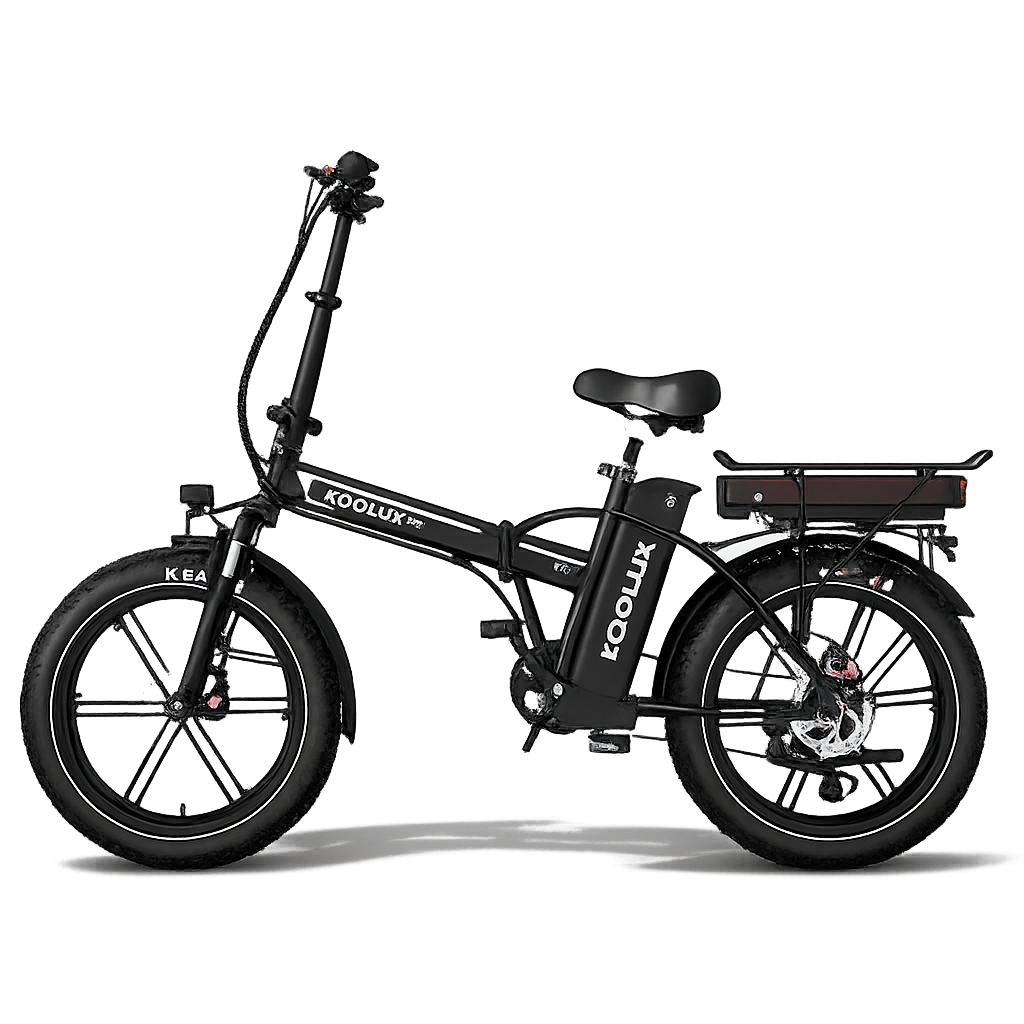
| KOOLUX X1 | £459 | ~£330 (£27.50/mo) | ~£266 (£22.20/mo) |
| KOOLUX X10 | £499 | ~£359 (£29.90/mo) | ~£289 (£24.10/mo) |
| KOOLUX KL6S | £819 | ~£590 (£49.10/mo) | ~£475 (£39.60/mo) |
| KOOLUX BK6S PRO | £959 | ~£690 (£57.50/mo) | ~£556 (£46.30/mo) |
Put another way: the scheme brings our flagship dual-battery BK6S PRO down to roughly the shelf price of a mid-range bike — and as we showed in our running-costs guide, it then costs pennies a day to run.
Who is eligible?
- You must be a PAYE employee — the scheme runs through payroll. Self-employed riders unfortunately cannot use it (though a bike bought for business use has its own tax treatment — ask your accountant).
- Your employer must offer a scheme. Most medium and large UK employers do; if yours does not, providers make it free and quick for them to join — HR usually just needs a nudge.
- Salary floor: the deduction cannot take your pay below National Minimum Wage, which can limit the bike value on lower salaries or shorter hire terms.
Which e-bikes qualify?
Any road-legal EAPC — 250W continuous motor, assistance cutting out at 15.5 mph. Every bike in our range ships EAPC-compliant as standard (our UK e-bike law guide explains exactly what that means). You can usually add accessories to the same package too: helmet, lock, lights, mudguards and panniers are all commonly included — worth doing, since a quality lock is essential for an e-bike.
The small print worth knowing
- If you leave your job mid-term, the outstanding balance is usually taken from your final net pay — you lose the remaining tax saving but keep the bike arrangement.
- The bike is technically hired until the end-of-term transfer. In practice this changes nothing about how you use it.
- Commuting requirement: the rules ask that the bike is used mainly for commuting or work journeys. Nobody tracks your rides; just, you know, ride it to work sometimes.
- Insurance is on you — the scheme does not cover theft. Budget £60–£150/year or check your home contents policy.
How to actually do it (5 steps)
- Ask HR which provider your company uses (Cyclescheme, Bike2Work, GCI or similar).
- Get a quote for the bike you want — you will need the price and retailer details.
- Apply through the provider portal; your employer approves it.
- You receive a voucher or certificate to redeem against the bike.
- Salary deductions start the following payday. That is it.
Common questions
Is there still a £1,000 limit?
No. The Department for Transport updated the guidance in 2019 specifically so that e-bikes — which typically cost more than £1,000 — could be included. Limits today are set by your employer and provider, not the government.
Can I use the scheme for a second bike?
Yes, once your current agreement ends — and some employers allow two concurrent agreements (for example, a folder for the train and a full-size for weekends). See our folding vs full-size comparison if you are deciding between the two.
Is it worth it on a £459 bike?
Absolutely — 28–42% off is 28–42% off. A KOOLUX X1 at ~£330 net is extraordinary value for a legal, warrantied e-bike.
Ready to run the numbers?
Browse the full Voltryv range, pick your bike, and take the price to your HR team. Free UK delivery and the 2-year warranty apply exactly as they would on a normal purchase.