Can You Take an E-Bike on a Train in the UK? The 2026 Rules

Updated September 2026 · Voltryv Editorial Team
This used to be a simple question. An e-bike was treated as a bicycle, and bicycle rules applied. Then a series of battery fires on the transport network changed the policy landscape, and the honest 2026 answer is that it depends entirely on which network you are standing on.
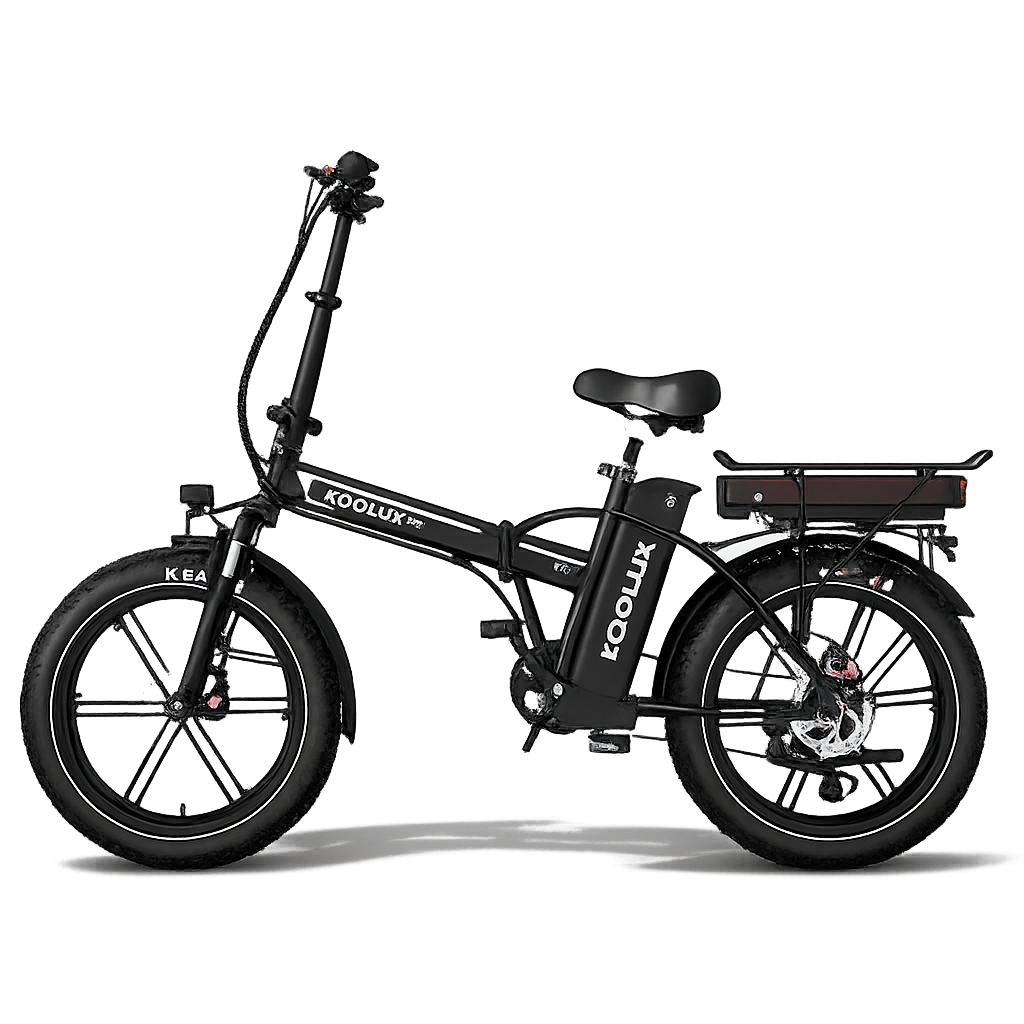
The short version: a folding e-bike, folded, is accepted almost everywhere. A full-size e-bike is banned outright on the London Underground network and will be banned across Merseyrail from January 2027, with other operators watching closely. If you are planning a bike-and-train commute, that distinction should drive what you buy.
London: the rule that changed everything
From 31 March 2025, Transport for London banned non-folding e-bikes from the Tube, London Overground, the Elizabeth line and the DLR. The decision followed a review with the London Fire Brigade after a number of e-bike fires on the network.
What that means in practice:
- Full-size e-bikes: not permitted, at any time, on those services. This is not a peak-hours restriction — it is a ban.
- Folding e-bikes: still permitted, but they must be fully folded and carried. Wheeling a half-folded bike through the gateline does not count.
- Enforcement has teeth. You can be refused entry, directed to leave the network, or fined up to £1,000 if prosecuted.
- Some services are exempt — the Woolwich Ferry, river services and coach services (subject to the operator), and the Silvertown Tunnel cycle shuttle still carry non-folding e-bikes.
Privately owned e-scooters, worth noting, have been banned across the TfL network since December 2021 and that has not changed. If you were weighing the two, our e-scooter versus e-bike comparison covers why the legal position is so different — and our guide to where you may legally ride covers the roads at either end of the journey.
National Rail: it varies, but the pattern is consistent
There is no single national rule. Each train operator sets its own cycle policy, and they differ. Across the network, though, three patterns hold.
A folded e-bike travels as luggage. This is the important one. Folded bikes are generally carried free, at any time including peak, with no reservation needed — because they are treated as a bag rather than a bicycle. That single fact is why folding models have become the default choice for multi-modal commuters.
A full-size e-bike is treated as a bicycle by most operators — accepted, but subject to the usual constraints: a reservation on longer-distance services, limited spaces (often two per train), and peak-time restrictions into and out of major cities. On the Elizabeth line and London Overground, only folding e-bikes may be carried at any time, with a limit of one per vestibule at peak.
Home-built and converted bikes are increasingly refused outright. Several operators that accept factory-built, road-legal e-bikes explicitly exclude conversion-kit bikes and anything modified. If you have added a kit to an ordinary bicycle, assume you will be turned away, and check before you travel.
Operator policies are published on each company's website and on National Rail's cycle travel page. Check the week you travel rather than relying on what was true last year — this is a fast-moving area.
Merseyrail: the first full network ban outside London
From 1 January 2027, Merseyrail bans non-folding e-bikes across its entire network — not just on trains, but at stations, in car parks, in cycle storage areas and inside station buildings. Announced in July 2026 after a safety review, the ban also covers:
- modified or adapted e-bikes;
- e-bike conversion kits;
- loose lithium-ion e-bike batteries carried separately from a bike.
Ordinary pedal bicycles, folding e-bikes and approved mobility scooters remain permitted. Travelling with a banned item can mean refused entry, removal from a train or station, or a penalty under the Railway Byelaws.
Whatever you make of the policy, the direction of travel is clear enough to plan around: folding is the format that keeps working.
Buses, trams and coaches
Simpler, and stricter. Buses and trams take folded cycles only — no full-size bikes of any kind, electric or otherwise — and even a folded bike is generally at the driver's discretion and must not block the aisle or doorway. Coach operators vary, and several will not carry lithium batteries in the luggage hold at all. Ring ahead rather than turning up with a 35 kg folder.
Why this is happening
It is worth being straight about the cause, because the coverage rarely is. The fires that drove these bans have overwhelmingly involved conversion kits, incompatible chargers, and cheap non-compliant replacement batteries — not mainstream factory-built e-bikes with matched packs and chargers.
That distinction does not help you at the gateline, where staff cannot inspect a battery and so the rule is drawn by shape instead. But it should absolutely shape how you buy and charge: use the charger supplied with the bike, never a generic replacement pack, and follow the routine in our battery care guide. The same reasoning is why we are cautious about used bikes of unknown provenance in our second-hand buying guide.
What this means if you are buying
If any part of your regular journey involves a train, a tram or a bus, buy a folder. That is the practical conclusion, and it is worth more than any spec comparison.
But here is the honest caveat, because it catches people out: a fat-tyre folding e-bike is not a Brompton. Ours weigh between 25.6 kg and 38.6 kg. Folded, they go in a boot, a hallway or a cupboard perfectly well — but carrying one up the stairs at a station with no lift, twice a day, is not realistic for most people.
| Model | Price | Weight | Best for |
|---|---|---|---|
| KOOLUX X10 | £499 | 25.6 kg | The lightest we sell, and the most realistic to lift |
| KOOLUX BK6S 750W | £739 | 34.2 kg | Compact fold (93 × 55 × 76 cm), strong 750W platform |
| KOOLUX X11 | £899 | 38.6 kg | Dual battery, hydraulic brakes, longest range of the three |
So ask the harder question first: do you actually need the train leg? A 15 km each-way commute is well within the range of a long-range e-bike, and riding the whole way removes the timetable, the ticket and the gateline argument entirely. Where the train is genuinely unavoidable — a long inter-city leg, a river or an estuary — a folder is the answer. Our folding versus full-size guide works through six real UK commutes, and the folding rankings compare the models directly.
How to travel with a folded e-bike without being stopped
- Fold it before you reach the platform, not on it. Staff decisions are made at the gateline.
- Carry it, do not wheel it. TfL's rule is explicit on this, and it is the most common reason people are refused.
- Use a cover if you have one. A folded, covered bike is unambiguously luggage.
- Leave the battery in the bike. A loose lithium pack is itself prohibited on some networks, including Merseyrail from January 2027.
- Never travel with a damaged or swollen pack. If a battery has been dropped hard, crashed, or looks deformed, it does not go on a train — it goes to a dealer.
- Avoid peak vestibules. Even where you are within the rules, one folded bike per vestibule is the usual limit at peak.
- Check the operator's page the week you travel. These policies have changed twice in eighteen months.
Common questions
Is my factory-built, road-legal e-bike banned everywhere now?
No. If it does not fold, it is banned on the Tube, Overground, Elizabeth line and DLR, and will be banned across Merseyrail from 1 January 2027. Most other National Rail operators still carry it as an ordinary bicycle, subject to reservations and peak restrictions. Roads, cycle lanes and shared paths are unaffected — it remains a legal EAPC.
Can I take the battery out and carry the bike on separately?
That does not help, and on some networks it makes things worse. A non-folding bike is banned by its shape regardless of whether the battery is fitted, and a detached lithium pack carried loose is itself on Merseyrail's prohibited list.
What about a conversion-kit bike?
Assume no. Several operators exclude converted and modified e-bikes explicitly, even where factory-built ones are accepted, and Merseyrail's ban names conversion kits directly. It is one more reason to buy a complete bike with a matched battery and charger rather than convert.
Can I fly with an e-bike battery?
Effectively no. Airlines cap lithium batteries at 100 Wh in the cabin, or up to 160 Wh with prior airline approval. The smallest pack we sell is 624 Wh — four times the ceiling — so e-bike batteries cannot be flown as passenger baggage at all. Ship the bike, or hire at the other end.
Do I need insurance to take an e-bike on public transport?
It is not required, but a bike being carried, lifted and stacked in a vestibule is a bike at higher risk of damage and theft than one that stays in a shed. Our insurance guide covers what cover actually costs, and the security guide covers station parking, which is where most e-bikes are stolen.
Buy for the journey you actually make
Every bike above is held in UK stock with free delivery and a 2-year warranty. If your commute mixes pedals and platforms, browse the folding range; if it turns out you can ride the whole way, that is usually the better commute anyway. Employed? Cycle to Work takes 28–42% off either choice.