Electric Scooter vs Electric Bike: Which Should UK Commuters Buy?

Updated August 2026 · Voltryv Editorial Team
Electric scooters and electric bikes get lumped together as "micromobility", they cost similar money, and they compete for the same commuters. But in the UK there is one difference that towers over every spec comparison — so let us deal with it first.
The legal elephant in the room
At the time of writing (August 2026):
- Privately owned e-scooters are illegal to ride on UK public roads, cycle lanes and pavements. You can buy one freely, but you can only ride it on private land with the landowner's permission. The only street-legal scooters are those in government-approved rental trial schemes operating in certain cities.
- Riding a private e-scooter in public risks a fine, penalty points on your driving licence, and the scooter being seized.
- Road-legal electric bikes (EAPCs) are fully legal everywhere bicycles are — no licence, tax, registration or insurance. The rules are in our UK e-bike law guide.
New legislation to legalise private e-scooters has been promised repeatedly for years and, as of this update, has still not arrived. Our honest advice: never buy a vehicle today on the strength of a law that might pass tomorrow.
Head-to-head comparison
| Factor | E-scooter (private) | Electric bike |
|---|---|---|
| Legal on UK roads | ❌ Private land only | ✅ Fully legal (EAPC) |
| Assisted speed | 15.5 mph (rental trials) | 15.5 mph — details here |
| Real-world range | 15–40 km | 25–150 km |
| Ride on potholes/wet roads | ⚠️ Small wheels, twitchy | ✅ Far more stable |
| Exercise | None | Genuine moderate exercise |
| Carrying shopping | Hard | Racks and panniers |
| Portability indoors | ✅ Excellent | ✅ Good (folders) |
| All-weather use | ⚠️ Poor in rain | ✅ Fine with sense |
| Typical quality price | £300–£800 | £459–£959 (our range) |
Where scooters genuinely win
Credit where due:
- Ultimate portability. A folded scooter is lighter and smaller than any e-bike — easy under a train seat or an office desk.
- Zero effort, zero sweat — though an e-bike on high assist is close.
- Rental trials. If your city has a scheme, renting occasionally is legal, cheap and commitment-free. This is the one fully legitimate way to scooter-commute in the UK.
- Private land. Large sites, campuses, farms — legal and practical.
Where e-bikes win
- You can legally ride one to work today — on roads and cycle paths, without checking whether your city runs a trial.
- Stability and safety. Bigger wheels roll over the potholes, drain covers and wet paint that pitch scooter riders off. In rain the difference is stark — our winter guide covers wet-weather riding that scooters simply cannot do.
- Range. Even our smallest battery outruns most scooters; the dual-battery BK6S PRO does 150 km — see the range maths.
- It counts as exercise — moderate, consistent, and proven to happen more often than gym plans (evidence in our worth-it guide).
- Cargo. A week's shopping on a rack beats a rucksack on a scooter deck.
- Buying protection. Legal products come with real warranties, insurable value and Cycle to Work eligibility — 28–42% off through salary sacrifice, which no scooter qualifies for.
The commuter maths
Running costs are near-identical — both charge for pennies (full breakdown). The real difference is what you can legally and practically replace: an e-bike replaces a car commute, a train ticket, a gym session and a supermarket run. A private scooter, legally speaking, replaces a walk around your own garden.
Our verdict
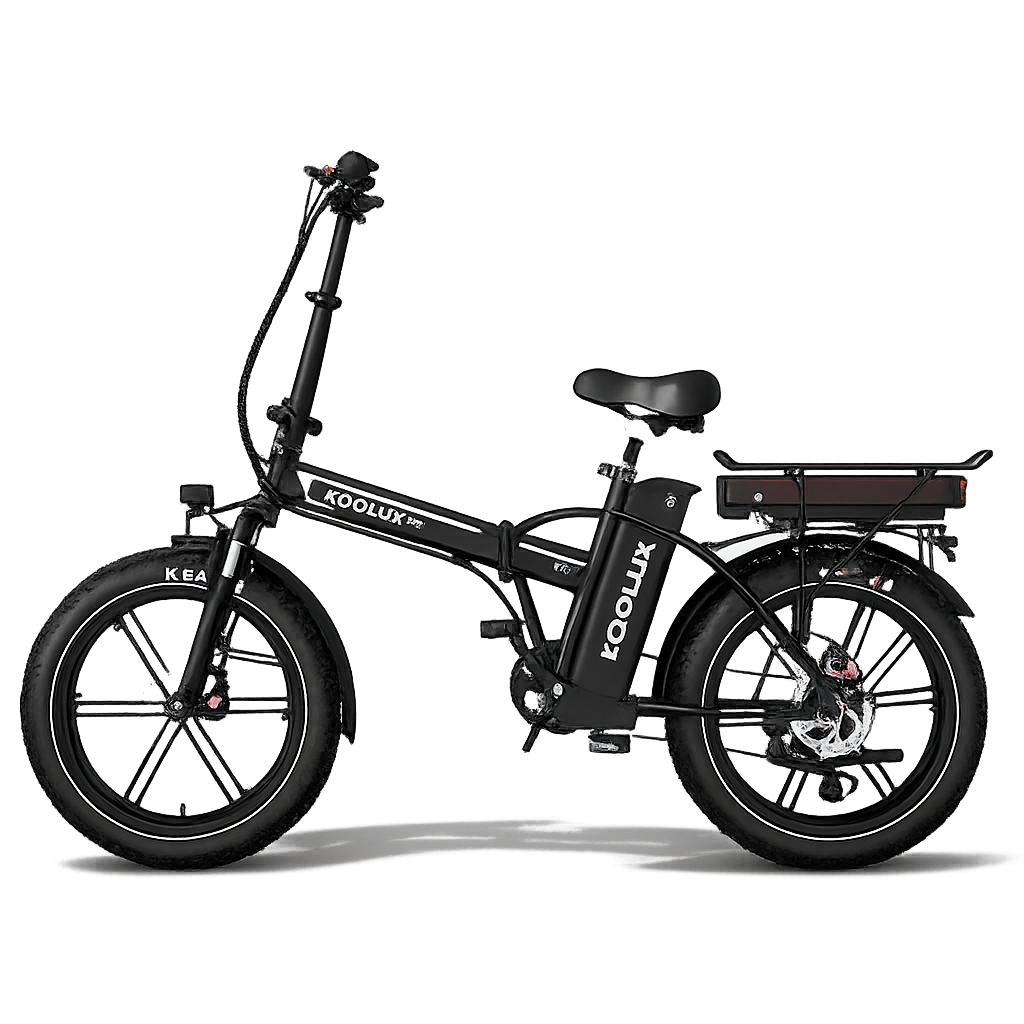
Buy the e-bike. Not because we sell them — because one is a legal, stable, all-weather vehicle and the other is a legal grey zone with small wheels. If the law changes and private scooters are legalised with sensible rules, the calculus shifts for very short journeys; until then, the portable-commuter role is served legally by a folding e-bike like the 17.4 kg KOOLUX X1 — which is why our folding guide exists.
Common questions
Will private e-scooters be legalised in the UK?
Legislation has been "expected shortly" since 2022. It may well come with speed, insurance and registration conditions attached. Plan around the law as it stands, not as promised.
Can I ride an e-scooter on the pavement?
No — that is illegal even for rental scooters, and it is the fastest way to turn public opinion (and police attention) against riders.
Do e-bikes need insurance or a licence?
No licence, no compulsory insurance — an EAPC is a bicycle in law. Optional theft cover is worth considering; see our insurance guide.
Ready to commute legally?
Browse the full Voltryv e-bike range — road-legal EAPC mode as standard, free UK delivery and a 2-year warranty on every bike.