How Much Does an Electric Bike Cost to Run in the UK? (2026 Guide)

Updated August 2026 · Voltryv Editorial Team
Here is the number that convinces most people: a typical UK commuter can run an electric bike all year for less than the cost of one tank of petrol. Not the purchase price, obviously — but electricity, servicing and consumables combined.
In this guide we break down the real running costs of an electric bike in the UK for 2026 — what a full charge costs, what a mile costs, what a year costs — and then put those numbers next to a car and a train season ticket. All figures are honest estimates based on the current Ofgem price cap and typical UK usage, not best-case marketing.
The headline numbers
- Cost of a full charge: 6p–33p depending on battery size
- Cost per mile: under half a penny — you can ride 100 miles for well under 50p
- Electricity for a year of commuting: around £17
- Total honest annual cost (servicing, tyres, insurance, battery fund included): roughly £150–£420
- Typical annual cost of the car it replaces: £2,000–£3,000+ before depreciation
How much does it cost to charge an electric bike?
Charging cost is simple maths: battery capacity in kilowatt-hours × your electricity unit rate. At the time of writing, the Ofgem price cap puts the average UK unit rate at roughly 26p per kWh. Add around 10–12% for energy lost as heat in the charger, and this is what a full 0–100% charge costs on our current range:
| Bike | Battery | Cost per full charge |
|---|---|---|
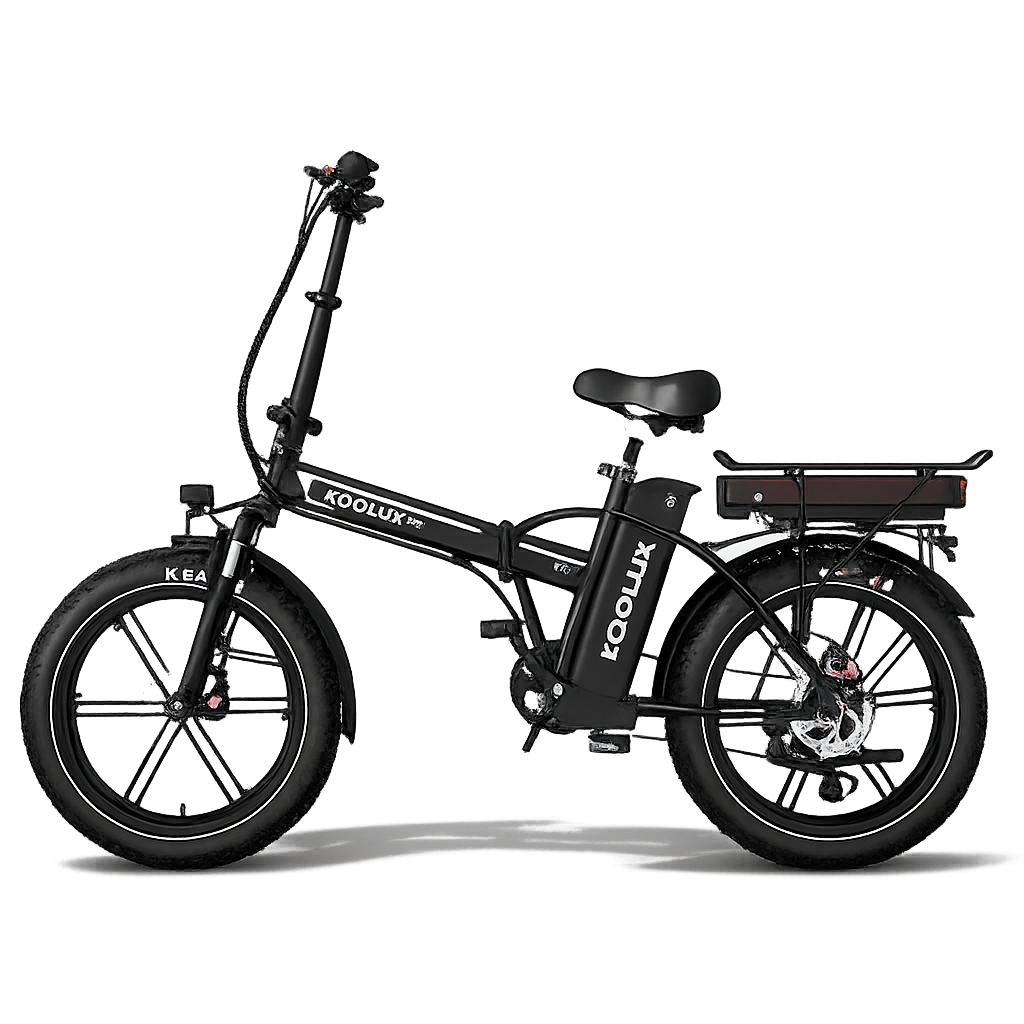
| KOOLUX X1 | 216 Wh | ~6p |
| KOOLUX X10 | 468 Wh | ~14p |
| BK6S 750W | 624 Wh | ~18p |
| KL6S | 749 Wh | ~22p |
| BK6S PRO / X11 | 1123 Wh (dual) | ~33p |
Yes — the biggest, longest-range battery we sell costs about the same to fill as a third of a chocolate bar.
What does an e-bike cost per mile?
A typical UK rider on medium assist consumes 8–12 Wh per kilometre (see our full e-bike range guide for why this varies). Taking 10 Wh/km plus charger losses at 26p/kWh:
- Per kilometre: ~0.3p
- Per mile: ~0.5p
- Per 100 miles: ~47p
For comparison, a 40 mpg petrol car costs roughly 16p per mile in fuel alone — about 32 times more. A £2,000 annual season ticket used for 400 journeys works out at £5 per journey before you walk anywhere.
The full annual cost of owning an e-bike
Electricity is the cheap part. Here is the honest total for a commuter riding around 5,000–6,000 km a year:
| Cost item | Annual estimate |
|---|---|
| Electricity | £15–£20 |
| Annual service (brakes, gears, spokes, torque check) | £50–£100 |
| Consumables (tyres, brake pads, chain) | £40–£70 |
| Insurance (optional but recommended) | £60–£150 |
| Battery replacement fund (optional) | £50–£80 |
| Total | £150–£420 |
About the battery fund: modern e-bike batteries are rated for 800–1,000 charge cycles. A commuter charging twice a week uses ~100 cycles a year, so the battery should comfortably outlast the 2-year warranty — but setting aside £50–£80 a year means a £250–£400 replacement is fully funded long before you ever need it.
E-bike vs car vs train: a year of commuting compared
| Mode | Typical annual cost |
|---|---|
| Electric bike | £150–£420 |
| Small petrol car (fuel, insurance, VED, MOT, servicing — no depreciation) | £1,800–£2,500 |
| Small petrol car including depreciation | £3,000–£4,500 |
| Rail season ticket (regional) | £1,500–£2,500 |
| Rail season ticket (into London) | £2,500–£4,000+ |
Even taking the most car-friendly numbers, an e-bike runs at roughly a tenth of the cost of the car journey it replaces. And unlike a car, it never pays the ULEZ charge, a parking meter or a congestion charge.
How fast does an e-bike pay for itself?
Divide the purchase price by what you stop spending:
- A KOOLUX X10 at £499 replacing a £2,500/year car commute pays for itself in about 10–12 weeks.
- Replacing a £2,000 regional season ticket: about 13 weeks.
- Even the flagship BK6S PRO at £959 breaks even inside 5 months against a modest car commute.
If your employer offers the Cycle to Work scheme, salary sacrifice typically knocks a further 32–42% off the purchase price, shortening payback to a matter of weeks.
Do I need to pay road tax, MOT or insurance?
No. A road-legal 250W EAPC is treated like a regular bicycle in the UK — no VED, no MOT, no compulsory insurance, no licence. (If you are unsure what counts as road-legal, read our UK e-bike law guide.) Voluntary theft and liability insurance at £60–£150/year is the only cover worth considering, and it is still optional.
Common questions
Is it cheaper to charge on an off-peak tariff?
Much cheaper. If you have an EV or smart time-of-use tariff with off-peak rates around 7p/kWh, a full charge drops to 2p–9p depending on battery size. Charge overnight-adjacent (in the evening off-peak window, not unattended while you sleep) and your annual electricity bill for commuting falls under a fiver.
Does charging at work cost my employer much?
A full charge costs an employer roughly the same as boiling a kettle three or four times. Most workplaces are happy to allow it — it is orders of magnitude cheaper than a parking space.
What is the single biggest running cost?
Tyres and servicing, not electricity. Keeping tyres at the correct pressure (check weekly) is the easiest way to cut both — under-inflated tyres wear faster and waste battery.
Bottom line
An electric bike costs pennies a day to run — the realistic all-in figure for most UK commuters is £3–£8 a week, versus £40–£80 a week for the car or train journey it replaces. The maths is not close.
Browse our full UK electric bike range — free UK delivery, 2-year warranty, and every listing shows honest real-world range figures.