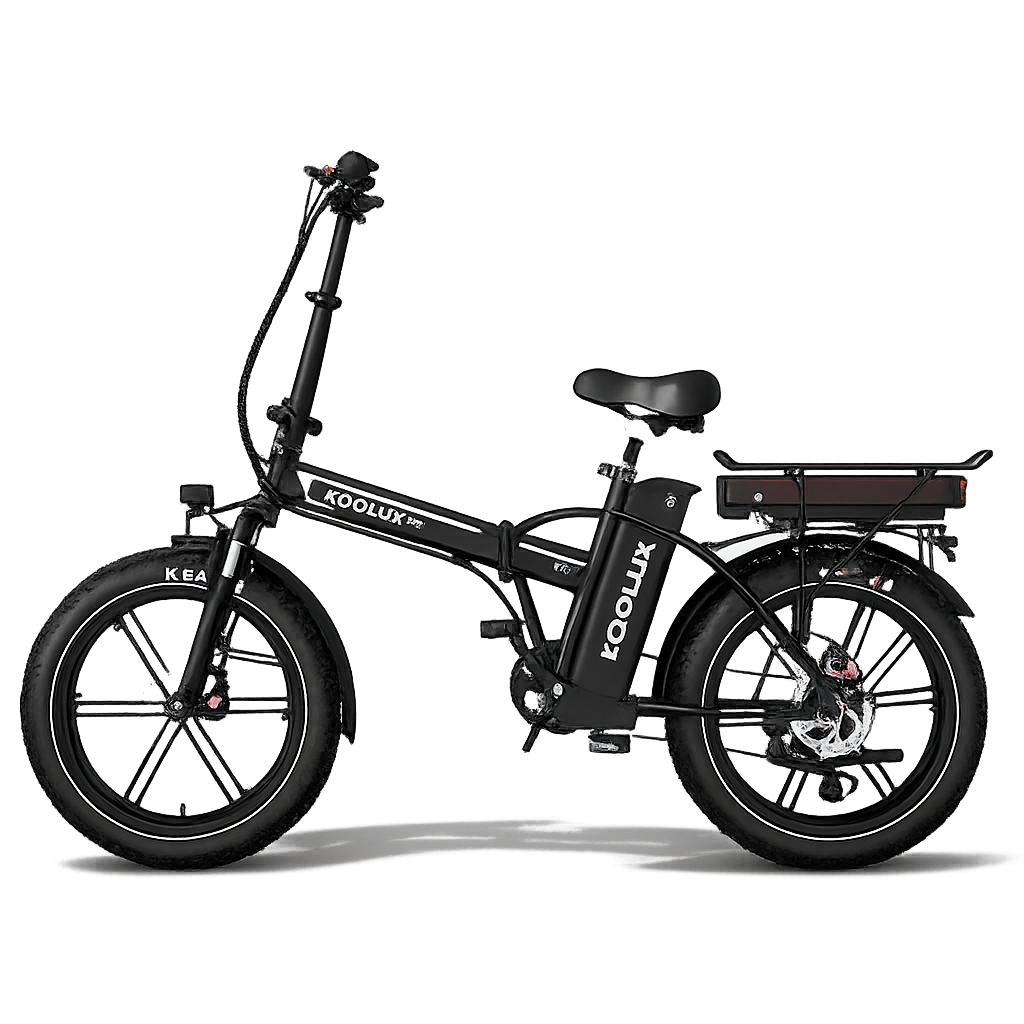
Where Can You Legally Ride an Electric Bike in the UK?

Updated August 2026 · Legal information — not legal advice
Most guides to UK e-bike law answer a different question from the one riders actually ask. They explain what makes a bike legal — 250W, 15.5 mph, pedals — which we cover in our e-bike law guide. This one answers the question that comes next: having bought a legal e-bike, where may you actually ride it?
The short version: a road-legal e-bike (an EAPC) may go anywhere a pedal cycle may go. That sounds simple until you realise how many surfaces in Britain have their own rules.
The one rule that decides everything
If your bike is an EAPC — 250W continuous, assistance cutting out at 15.5 mph, working pedals, rider 14 or over — the law treats it as a bicycle. Not a moped, not a motor vehicle. A bicycle.
So the question "can I ride my e-bike here?" is almost always the same question as "can I ride a pushbike here?" Once that clicks, the rest follows.
Where you can ride
✅ Public roads
Yes, everywhere a bicycle may go. No licence, no tax, no insurance, no registration, no helmet requirement (though we'd wear one). Motorways are the obvious exception — bicycles are banned, so e-bikes are too.
✅ Cycle lanes and cycle tracks
Yes. On-road painted lanes, segregated tracks, shared-use paths — all open to EAPCs.
✅ Bridleways
Yes. Cyclists have had the right to use bridleways since the Countryside Act 1968, and EAPCs count. You must give way to horses and walkers, and the surface is often rough — this is where fat tyres earn their keep. Note that unlocked higher-power modes are not permitted here: on a bridleway you are a cyclist, and a cyclist runs at 250W.
✅ Byways open to all traffic (BOATs)
Yes — these carry full vehicular rights, so a bicycle is comfortably within them.
⚠️ Canal towpaths
Usually yes, but it is permission, not a right. Most towpaths in England and Wales belong to the Canal & River Trust, which allows cycling on the majority of its network and asks riders to slow to walking pace near pedestrians, bridges and blind corners. Some stretches are signed as no-cycling. Because it is permission rather than a legal right, the landowner can withdraw it — so read the signs rather than assuming.
⚠️ Parks and commons
Depends entirely on the local authority or landowner. Many parks welcome cycling on marked paths and ban it on the grass; others allow it throughout; a few prohibit it. There is no national rule, so the sign at the gate is the rule.
⚠️ Private land
Only with the landowner's permission — but where you have it, this is the one place a higher-power unlocked mode may legally be used. Farms, estates, private tracks and pay-to-ride bike parks are where a 750W platform earns its keep.
Where you cannot ride
❌ Pavements
No. Cycling on a footway beside a road is an offence under the Highway Act 1835, and an EAPC is a cycle for this purpose. This is the single most common mistake, and the one most likely to generate a fixed penalty — and complaints from pedestrians that make life harder for every rider.
The exception is a shared-use path, which looks like a pavement but is signed for cycles. If there is no sign, assume it is a pavement.
❌ Public footpaths
Different from a pavement, and equally off-limits. A footpath (the signed rights-of-way across fields and countryside) carries a right of way on foot only. Cycling one is not a criminal offence but is a civil trespass against the landowner. Look for the waymarker: yellow arrow means footpath (walk), blue means bridleway (ride).
❌ Motorways
Bicycles are prohibited, so e-bikes are too.
❌ Anywhere, in unlocked mode
If your bike has a higher-power mode, engaging it on any public road, cycle lane, bridleway or towpath converts it into an unregistered motor vehicle in the eyes of the law — with the fines and seizure risk that follow. Public riding means EAPC mode. Full detail in our law guide.
At a glance
| Where | EAPC allowed? | Governed by |
|---|---|---|
| Public roads | ✅ Yes | Same rights as a bicycle |
| Cycle lanes & tracks | ✅ Yes | Same rights as a bicycle |
| Bridleways | ✅ Yes | Countryside Act 1968; give way to horses |
| Byways (BOATs) | ✅ Yes | Full vehicular rights |
| Canal towpaths | ⚠️ Usually | Landowner permission — check signage |
| Parks & commons | ⚠️ Varies | Local authority / landowner |
| Private land | ⚠️ With permission | Landowner — unlocked modes allowed here |
| Pavements | ❌ No | Highway Act 1835 |
| Public footpaths | ❌ No | Right of way on foot only |
| Motorways | ❌ No | Bicycles prohibited |
The three mistakes riders actually make
- Treating a pavement as a shared path. If it is not signed for cycles, it is not for cycles. The signs are small and easy to miss — look for the blue circular cycle symbol.
- Confusing footpaths with bridleways. Yellow waymarker means walk it. Blue means ride it. Getting this wrong on a country ride is trespass, not a criminal matter, but it sours relations with landowners fast.
- Leaving the bike unlocked out of habit. Riders who use full power on private land at the weekend sometimes forget to switch back. On a public road that is the difference between riding a bicycle and riding an unregistered motor vehicle.
Common questions
Can I ride an e-bike on the pavement to avoid heavy traffic?
No, and it is the offence most likely to be enforced. If a road feels unsafe, look for a parallel signed cycle route, or dismount and walk the stretch — pushing a bike on a pavement is perfectly legal.
Do the rules differ in Scotland?
Access rights are broader in Scotland under the Land Reform (Scotland) Act 2003, which gives responsible access to most land and inland water, including for cyclists. The EAPC construction rules are the same UK-wide; what differs is where you may go. Ride responsibly under the Scottish Outdoor Access Code.
Is there a minimum age?
You must be 14 or over to ride an EAPC on public roads. Below that age, no e-bike is road-legal for you, whatever its specification.
Do I need insurance for bridleways or towpaths?
No, it is not required anywhere on an EAPC. Third-party cover is still worth considering — our insurance guide explains when it earns its money.
Ride it everywhere a bike can go
Every bike in our UK range ships in road-legal EAPC mode, so it is welcome on roads, cycle lanes and bridleways from the day it arrives. New to this? Start with our 10-minute buyer's guide.